Week 8 – Continuing to Think About Data Privacy, Consent, and Trust Online
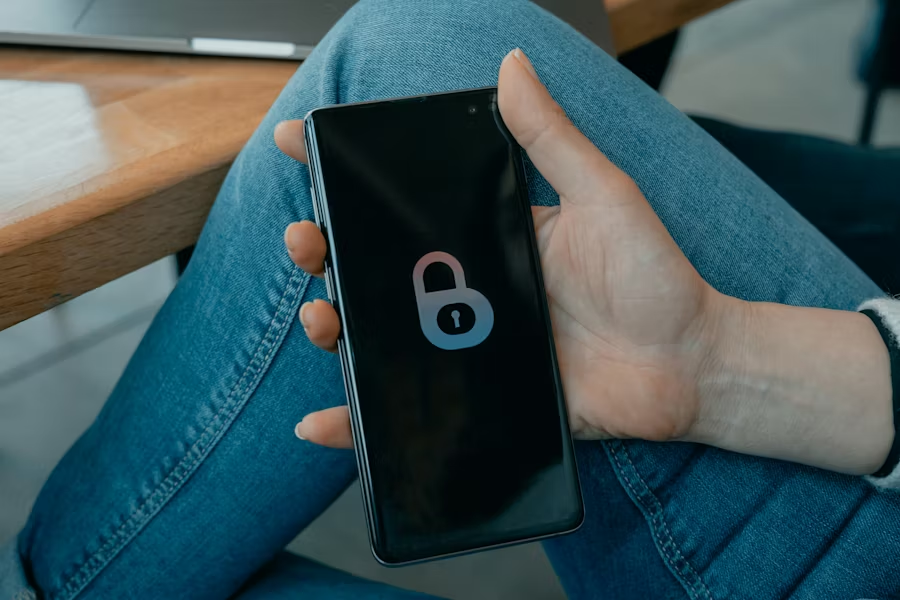
Photo by Tech Daily on Unsplash
In my earlier post on data privacy, consent, and open copyright, I focused mostly on what I personally learned about being a responsible digital citizen. This time, I wanted to go a bit deeper and see what research says about privacy and security in online learning spaces, and how that connects to my own habits as a student.
Security Risks in Online Learning
One article that stood out to me looked at security risks and protection strategies in online learning environments (Chen & He, 2013). The authors reviewed both academic literature and blog posts to understand what people are worried about and what protections are actually being used. They found that while researchers talk a lot about risks like data breaches, identity theft, and unauthorized access, many online learning providers don’t treat security as a top priority in practice.
This connects directly to what I wrote before about clicking “accept” without thinking. Even if platforms include privacy policies or security features, they don’t always clearly explain them, and students may not know how their information is being stored or shared. Reading this article made me realize that privacy is not just about what I choose to share, but also about whether the systems I use are designed with protection in mind. It reinforced my feeling that institutions and platforms have a responsibility to communicate risks clearly and to build security into the design from the beginning, not as an afterthought.
How Students Understand Privacy
I also read a study that explored how high school students think about privacy and how they use technology in their daily lives (Gogus & Saygin, 2019). The researchers surveyed over a thousand students about their use of devices, social media, passwords, and their awareness of data protection. They found something interesting: many students do worry about privacy, but their actual behaviour doesn’t always match their concerns. For example, some share passwords with friends or post personal information online, even while saying they care about privacy.
This reminded me of my own “privacy paradox” moments — times when I say I care about data protection, but still reuse passwords or quickly agree to terms just to get access to a tool. The study helped me see that part of the problem is that privacy risks are often invisible or abstract. It’s hard to feel the danger of data collection when nothing “bad” seems to happen right away. That’s why education about privacy needs to be practical and example-based, not just legal language.
Connecting Back to My Own Practice
Putting these readings together with my previous reflection, I feel like my understanding of digital citizenship has shifted again. Before, I mostly focused on my actions: asking for consent, giving credit, and thinking more carefully about what I share. Now, I also see the importance of questioning the design of the tools and platforms I use.
As a student in computing, this matters even more. In the future, if I help design apps, learning platforms, or any kind of online service, I don’t want privacy and security to be “extra features.” Instead, I want them to be part of the core design — clear settings, simple language, and respectful defaults. Research shows that learners are often aware of risks but still feel uncertain about how to protect themselves (Chen & He, 2013; Gogus & Saygin, 2019). That tells me that good design and clear communication are just as important as the technical security behind the scenes.
Going forward, I want to keep asking myself:
- What data is really necessary to collect here?
- Have I clearly told people how their data will be used?
- Would I feel comfortable if this were my information?
These questions feel like a natural next step from my earlier post and a way to turn what I’ve learned about privacy, consent, and copyright into everyday practice.
References
Chen, Y., & He, W. (2013). Security risks and protection in online learning: A survey. The International Review of Research in Open and Distributed Learning, 14(5), 108–127. https://doi.org/10.19173/irrodl.v14i5.1632
Gogus, A., & Saygin, Y. (2019). Privacy perception and information technology utilization of high school students. Heliyon, 5(5), e01614. https://doi.org/10.1016/j.heliyon.2019.e01614